Chumming Techniques
How to Use Chum When Fishing for Pompano
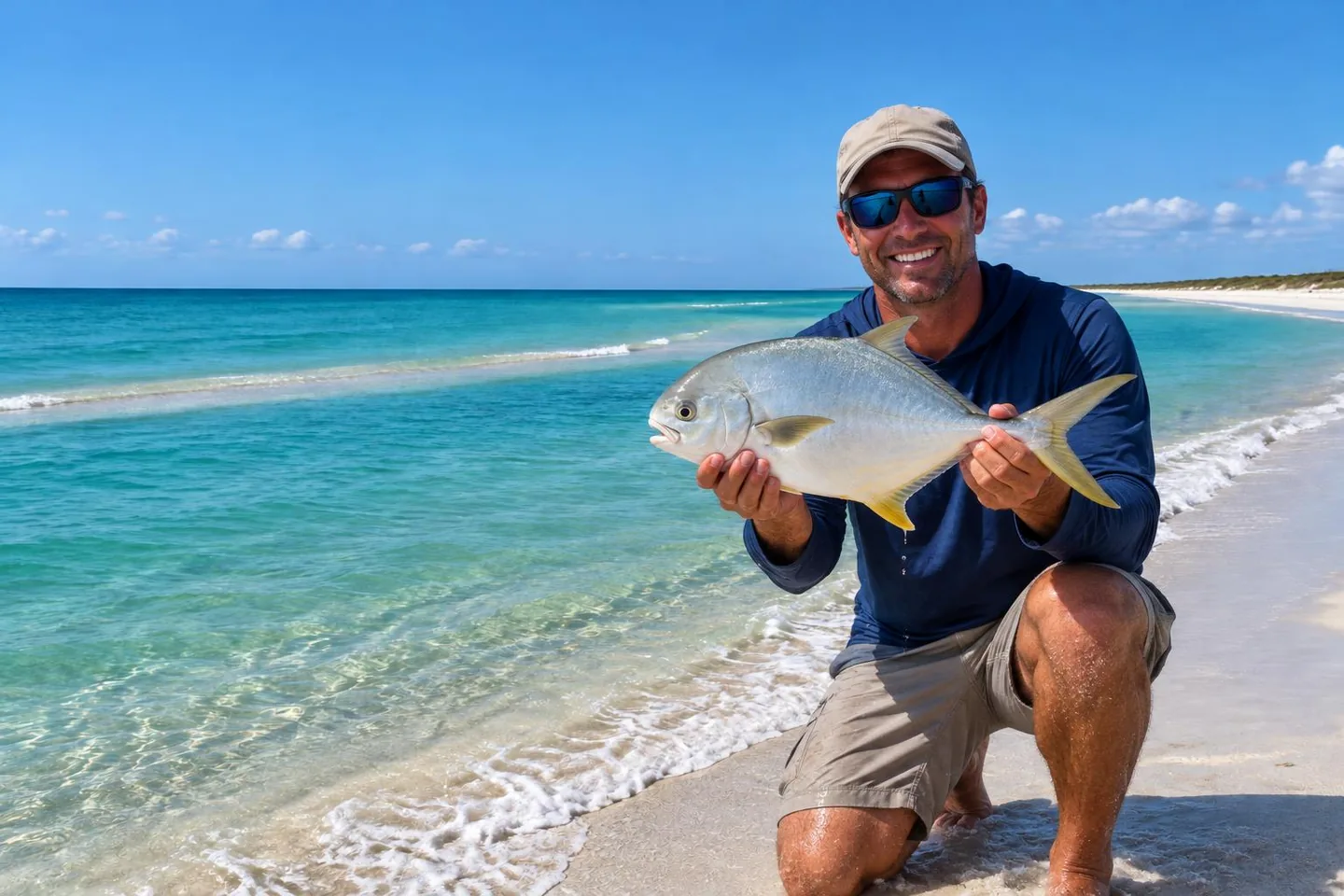
Pompano fishing starts with locating fish and presenting appropriate hooked bait—not with a guaranteed chum recipe. Chumming for pompano should be treated as situational experimentation only where it is legal. Florida prohibits chumming from beaches and immediately adjacent wading waters, so Florida surf anglers should focus on lawful baited-hook techniques instead.
Know the fish before changing the method
Florida pompano feed on small prey in coastal environments. A northern Gulf surf-zone diet study documented coquina clams, mole crabs, and worms among their food items, with smaller fish also eating zooplankton. That helps explain why anglers often choose small natural bait presentations. It does not establish one bait as best everywhere or prove that loose chum improves catches.
Do not confuse Florida pompano with every other fish that shares a similar common name or appearance. Learn identification before keeping a fish and check the regulations for the actual species. If you cannot identify the catch confidently, do not make a keeper decision based only on a bait-shop nickname or an old photograph.
Look for fishable surf water
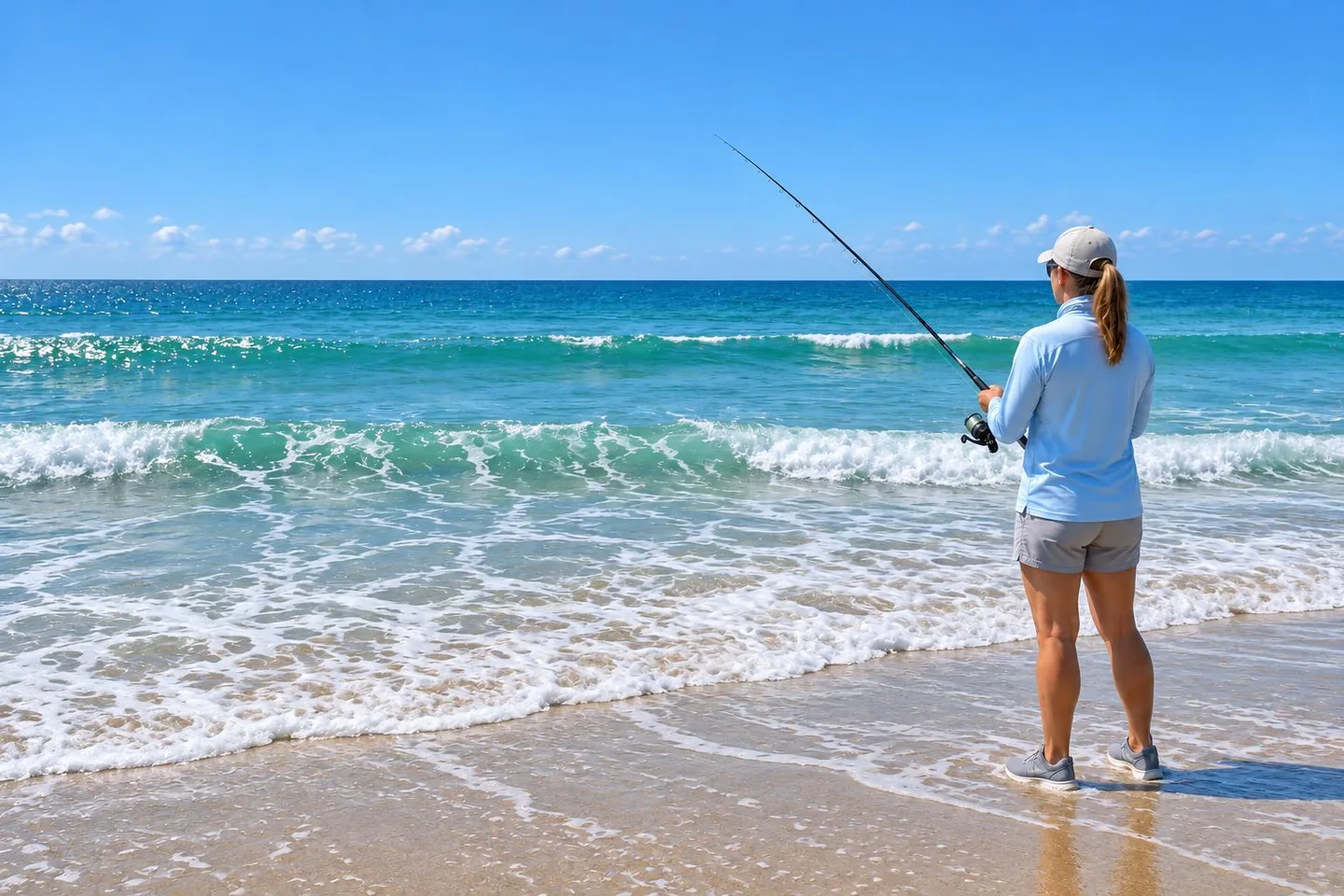
Open sandy beaches are familiar places to try pompano fishing, but access to a beach does not tell you where fish are that day. Watch where waves break and where a trough appears to run between the beach and an offshore bar. Changes in breaking-wave patterns can suggest depth changes worth investigating with a legal baited rig.
Treat sandbars and troughs as clues, not guaranteed fish locations. Fish may pass through closer water than a long cast reaches, and conditions may make one area difficult to fish cleanly. Start where you can safely control your presentation. Do not wade into a channel or rip to reach a bar, and leave swimming and protected areas alone.
Established baits and traditional rigs
Sand fleas, also called mole crabs, fresh shrimp, clams, and synthetic bait strips are common recreational choices. Their usefulness depends on availability, legality, durability on the hook, and local conditions. Match a modest bait portion to the hook rather than hiding the point in a bulky offering. Replace bait that has washed out or been stripped without a clear bite.
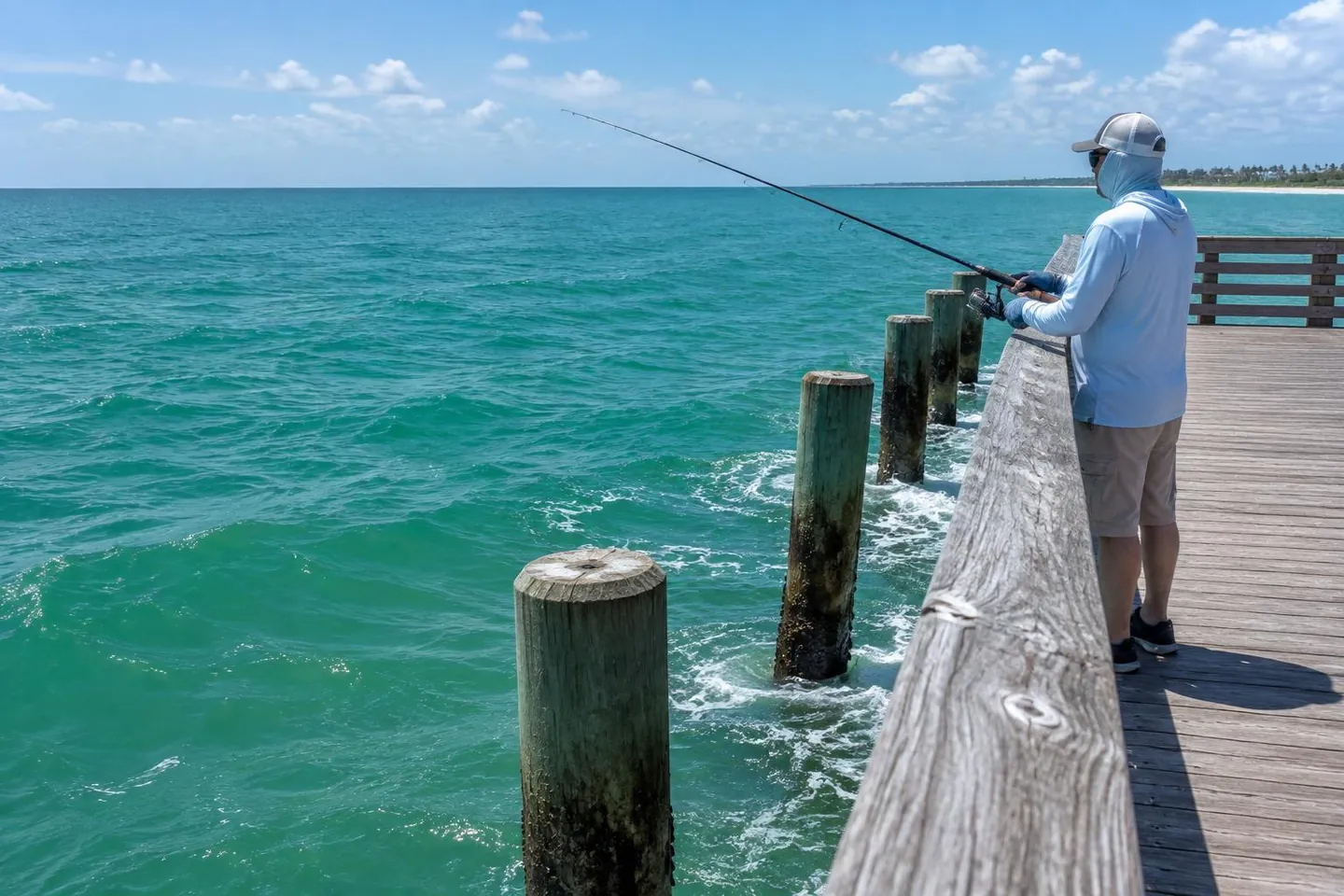
A traditional approach is a baited surf rig with one or more permitted hook droppers above a sinker. Some anglers also use suitable jigs or other artificial offerings. Follow local hook and tackle rules, and make sure the combined sinker and terminal-tackle weight stays within the rod’s casting recommendation. Familiar methods are a starting point, not a guarantee of a productive tide.
Let the water guide your adjustments
Current, wave action, weed, and wind all affect how a rig fishes. A bait that drifts out of the intended area or collects weed is not the same presentation you cast a few minutes earlier. Check your line angle and bring the rig in periodically to inspect it. Adjust fishing distance or location before adding weight beyond what your tackle can handle.
There is no universal best tide or current direction for pompano at every beach. Record what you observe locally, including the water’s movement, bait condition, and where bites occur. Comparing a few controlled changes is more informative than assuming the tide chart alone explains success or a quiet session.
Where chumming fits—and where it does not
The established basics above should remain separate from the idea of adding a chum trail. We are not claiming that chumming is proven to increase pompano catch rates. In a permitted location, an angler might test whether a small, controlled release changes feeding interest near a bait presentation. That is an observation, not evidence that the method works across species, beaches, or seasons.
In Florida, do not conduct that experiment while fishing from a beach or wade-fishing immediately adjacent to one. FWC’s restriction is broader than only fish scraps and covers qualifying animal and imitation-animal products used to attract marine life. Putting those contents inside a personal dispenser does not avoid the rule. Legal hooked bait remains a different category.
Consider drift before any legal experiment
Where local rules allow chumming, material released upstream generally moves with the current, while particles may also settle or remain suspended. A surface release may pass away from the bottom bait you intended to fish. Wave mixing can complicate that picture further. There is no reliable assumption that a visible surface trail overlaps a pompano rig on the seabed.
Use modest amounts and avoid attracting unwanted wildlife. Stop if the release affects other anglers or swimmers, or if you cannot keep the container secure and recoverable. Do not add more simply because you have not had a bite. Poor bait placement, absent fish, or unsuitable conditions are not problems that an increasingly large chum release necessarily solves.
Personal dispensers are tools, not promises
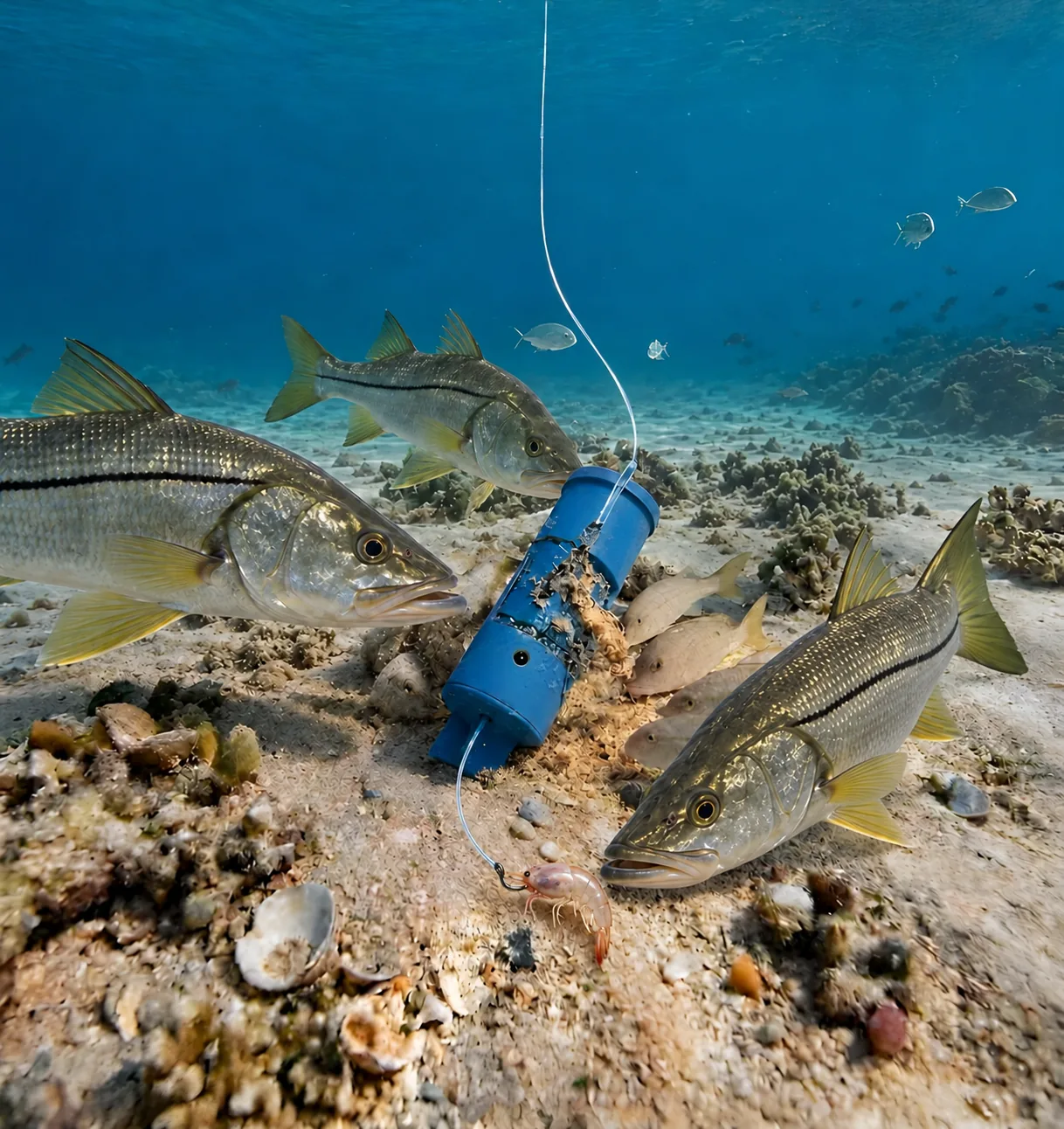
Chum Buddy™ is one possible dispenser for locations where use is permitted. Its Sinking model releases material lower in the water column, while its Floating model releases from the surface. Both are reusable, refillable, and have a removable internal chum bucket. Select by release position, current, and rig management—not an unsupported promise of catching pompano.
The bucket’s smaller openings generally slow dispersion compared with the larger exposed housing openings, but release still varies with water movement and material. Follow model-specific loading and rigging instructions and check total loaded casting weight. If your fishing location prohibits chumming, leave the chum system out of the plan and work on your legal hooked-bait presentation instead.
Fish responsibly and keep useful notes
Verify current species identification, size and bag limits, licensing, and location restrictions with the relevant authority before fishing. This guide intentionally does not print numeric limits that may change. Handle fish carefully, have appropriate measuring tools ready if you plan to keep a legal catch, and avoid leaving fish exposed while searching through a tackle bag.
Look behind you before casting, keep hooks clear of beachgoers, and watch weather and surf conditions. Take discarded line and packaging home. Record your bait, distance, rig condition, and water observations after the trip. The most useful outcome may be a better understanding of the beach—not a product purchase, a bigger chum release, or a promise that the next session will produce fish.
Sources & further reading
- Florida FWC: fish feeding and chumming rules
- Modde & Ross: Florida pompano feeding ecology in the northern Gulf surf zone
- Florida Sportsman: surf-fishing rigs and bait
Regulations can change. Verify current rules with the relevant authority for your fishing location; this guide is not a substitute for official guidance.